

A Healthcare System in Crisis
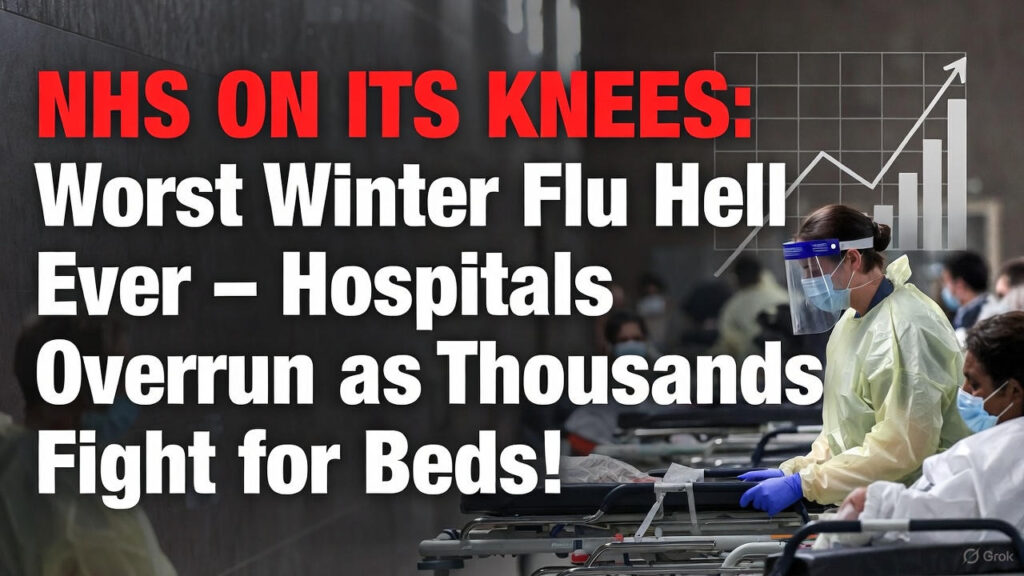
The NHS is facing its toughest winter yet as hospitals buckle under the strain of the worst flu outbreak in years. Emergency departments are overwhelmed, with patients waiting hours—sometimes days—for a hospital bed. Doctors and nurses are at breaking point, and the government is under fire for failing to prepare for this predictable crisis.
Why is this winter different? What’s driving the surge in cases, and what can be done to ease the pressure? This article dives into the chaos gripping the NHS, the impacts on frontline staff, and what patients can do to stay safe.Create article feature image:
Act as a graphic designer and create a professional blog article feature image using the text below. Add image to make it professional
Why Is This Flu Season So Severe?
The UK is experiencing the worst flu outbreak in a decade, fueled by a perfect storm of factors:
- Multiple Strains Circulating – This winter has seen aggressive strains of influenza A and B, along with rising cases of respiratory syncytial virus (RSV).
- Low Vaccination Rates – Despite NHS efforts, flu jab uptake remains lower than pre-pandemic levels, leaving vulnerable groups exposed.
- Post-Pandemic Vulnerabilities – Years of social distancing weakened immunity, making flu infections more severe than usual.
- NHS Staff Shortages – Chronic underfunding and workforce gaps mean hospitals lack the capacity to handle the surge.
Key Statistics:
📌 Hospital admissions for flu have doubled in recent weeks (UKHSA).
📌 A&E wait times now exceed 12 hours for many patients.
📌 Over 95% of hospital beds are occupied, leaving little space for emergencies.
Hospitals in Chaos: Stories from the Frontline
NHS staff describe scenes of “absolute carnage” in emergency departments, with corridors lined with patients on trolleys and exhausted medics struggling to keep up.
💬 A Nurse’s Account (Anonymous):
“We’re seeing elderly patients collapsing in waiting rooms. Some have been here 24 hours before being seen. It’s heartbreaking—we simply don’t have the beds or staff.”
Experts warn that without urgent action, thousands could die unnecessarily from delayed treatment.
What’s the Government Doing?
Officials have announced emergency measures, including:
✅ Temporary Nightingale-style wards to ease bed shortages.
✅ More funding for social care to free up hospital beds faster.
✅ Public awareness campaigns urging flu vaccinations.
But critics argue this should have been planned months ago.
How Can YOU Stay Protected?
🔹 Get Vaccinated (It’s Not Too Late!)
The flu jab is still available for free for:
- Over-50s
- Pregnant women
- Those with chronic illnesses
🔹 Know When to Seek Help
❌ Don’t clog A&E with mild flu—use 111 online first.
✔ Only go to hospital for severe symptoms (e.g., difficulty breathing, chest pain).
🔹 Protect the Vulnerable
- Wear masks in crowded places.
- Wash hands frequently.
- Stay home if sick.
Conclusion: A Call for Action
The NHS is at a breaking point, and while emergency measures may help, long-term solutions—like better funding, staffing, and winter planning—are desperately needed.
What can YOU do?
- Get vaccinated if eligible.
- Spread awareness—share this article.
- Demand better healthcare policies by contacting your MP.
This winter’s crisis is a wake-up call—will the government listen?
“NHS in crisis as worst flu outbreak in years overwhelms hospitals. Why is this winter so bad? How to stay safe. #NHSWinterCrisis #FluOutbreak”
Have you or a loved one been affected by NHS delays this winter? Share your story in the comments! 💬👇


